When returning an Eric Emanuel hoodie, the amount shown on the product page cannot be directly treated as the final expense. A more reliable approach is to first confirm the specific style, and then record the purchase cost, warehousing handling, packaging, international shipping, exchange rate, and any possible taxes and fees separately. If any one of these fields lacks reliable data, you should pause payment or confirm with the agent instead of filling in with estimated figures.

First Lock Down the Specific Product
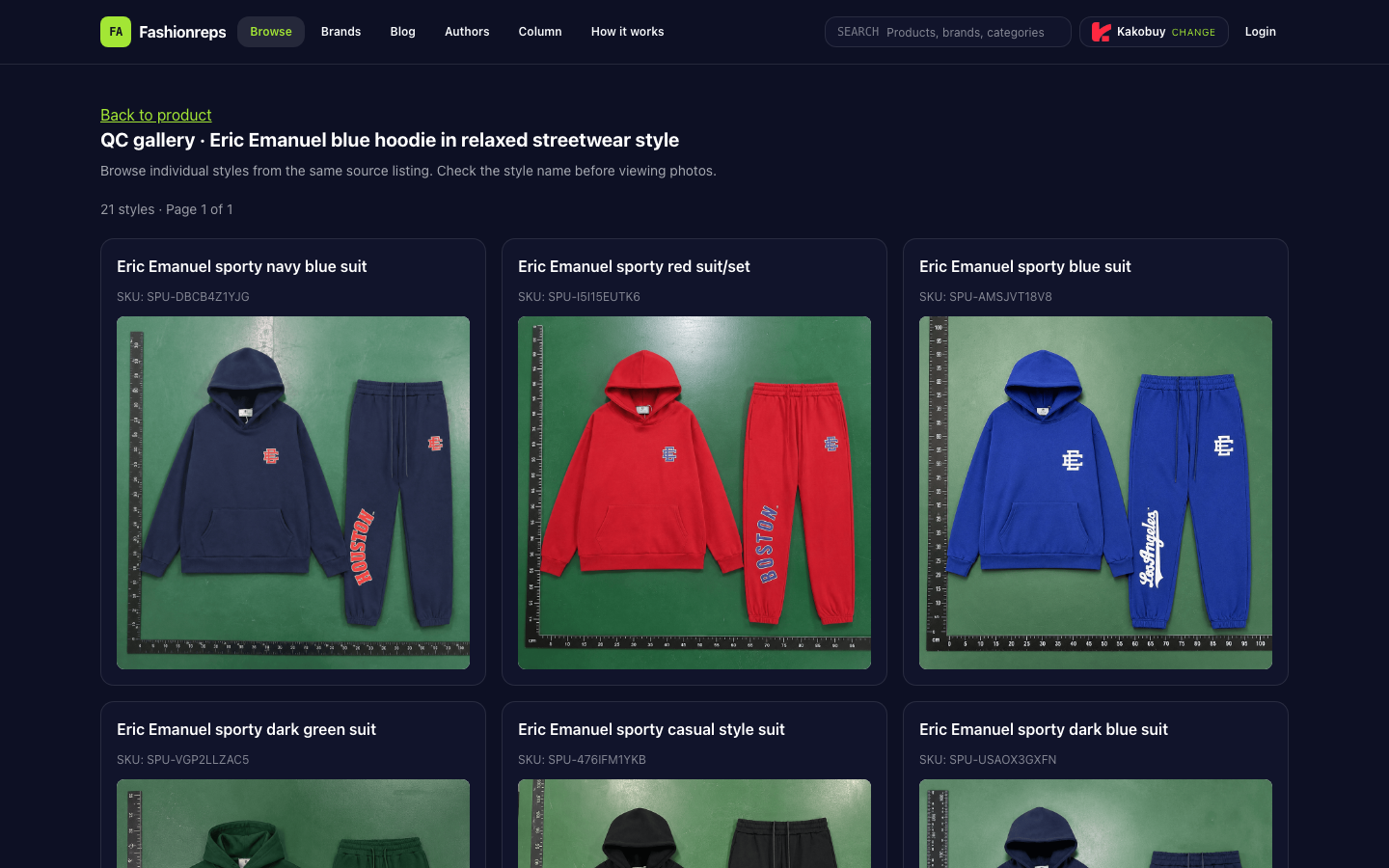
Fashionreps' corresponding QC page shows that this source product has 21 styles, including multiple blue hoodies and sweatpants. The page lists different names such as "Eric Emanuel Classic Simple Style Blue Hoodie" and "Eric Emanuel simple style blue hoodie", and also provides style SKUs separately. They cannot be treated as the same item without further verification.
Before placing an order or returning, you should save the following information:
- Page title and specific style name
- Corresponding SKU
- Color, size, and quantity
- Page viewing time
- Packaging status shown on the product page or QC page
- Physical photos or inspection results provided by the warehouse after receipt
If you only know "blue Eric Emanuel hoodie" but cannot match it to a specific style and SKU, you should not use that to confirm product price, weight, or final shipping cost.
Break Down Costs into Separate Fields
It is recommended to create a cost record before returning, rather than just copying a total price. At least divide it into the following items:
- Product price: The purchase amount corresponding to the confirmed style, color, size, and quantity.
- Agent service fee: Including fees for purchasing or agency services; do not assume rates without official details.
- Payment fees: Record the payment method, currency, and any additional fees actually displayed on the page.
- Storage or handling fees: Include only if they appear clearly on the agent's settlement page or fee description.
- Packaging fees: Distinguish between keeping original packaging, removing excess packaging, reinforcing or replacing packaging, etc.
- International shipping: Based on destination, route, chargeable weight, and current calculator or settlement page results.
- Exchange rate impact: Record the original currency, conversion currency, exchange rate source, and query time; do not mix exchange rate fluctuations into the product price.
- Taxes and insurance: Record only if there is clear basis in the route description, settlement page, or customer service confirmation.
The product evidence currently provided only proves the style list and QC page status, and does not provide specific product price, warehouse actual weight, package dimensions, destination, route quote, or tax data. Therefore, this article does not fill in any specific amounts.
Packaging Decisions Must First Look at Physical Condition
Hoodies are usually affected by garment volume, folding method, and outer packaging, but you cannot deduce the actual chargeable weight or shipping cost from the category alone. After receiving warehouse photos, you should first confirm:
- Whether shoe boxes, gift boxes, plastic bags, or other non-essential packaging are still kept
- Whether the clothing has been compressed, folded, or bagged
- Whether the package has obvious empty space
- Whether the packaging needs moisture protection or reinforcement
- Whether the agent will charge based on actual weight, volumetric weight, or the higher of the two
Removing packaging may reduce volume but may also change protection. Do not ask the warehouse to remove all packaging just because you expect to save shipping costs, especially when you haven't seen physical photos or confirmed the agent's operating rules.
Weight and Shipping Cost Must Use the Same Set of Conditions
When querying shipping costs, you should simultaneously record the destination, product category, package actual weight, dimensions, route name, whether insurance is included, query time, and quote validity. If key fields are missing, the calculator result may not be usable for payment decisions.
Specifically distinguish between actual weight and chargeable weight. If the agent page uses volumetric weight, package dimensions will directly affect the result; if it uses tiered pricing, a slight weight change may push the quote into the next tier. Do not substitute current package data with weights from other orders or online experience.
When there is no real-time route quote and current warehouse weight evidence, it is recommended to handle in the following order:
- Wait for QC photos and warehouse weighing information.
- Record package dimensions and the agent's displayed billing rules.
- Use the agent's official shipping calculator or actual settlement page to query the current destination quote.
- Take screenshots to save the route, weight, restrictions, and query time.
- If the page does not explain any additional fees, confirm with customer service before paying.
First Verify Carriability, Then Compare Prices
Whether the route accepts clothing packages, restricts specific packaging, requires filling in the product category, and has destination restrictions should all be based on the current route description or settlement page. Do not assume that because a route has carried other clothing before, it will definitely accept the current package.
If there is uncertainty in product information, packaging status, or destination declaration requirements, keep customer service confirmation records. If customer service does not give a clear answer, mark the route as pending confirmation rather than treating the quote as an executable plan.
Pause Conditions Before Payment
If any of the following occur, you should pause the return:
- Style name and SKU cannot be matched
- Color, size, or quantity not yet confirmed
- Only product price, no fee breakdown
- Warehouse actual weight or package dimensions missing
- Chargeable weight rules unclear
- Destination or route restrictions not confirmed
- Quote lacks query time or validity conditions
- Total amount shown on the page cannot be broken down into product, service, packaging, and shipping fields
The final record should retain product evidence, QC photos, warehouse weighing, packaging choices, route query results, and customer service replies. This way, even if prices change later, you can determine whether the change comes from the product, exchange rate, packaging, or shipping conditions, rather than mistaking an incomplete total price for the return cost.